Significant Details of the Event
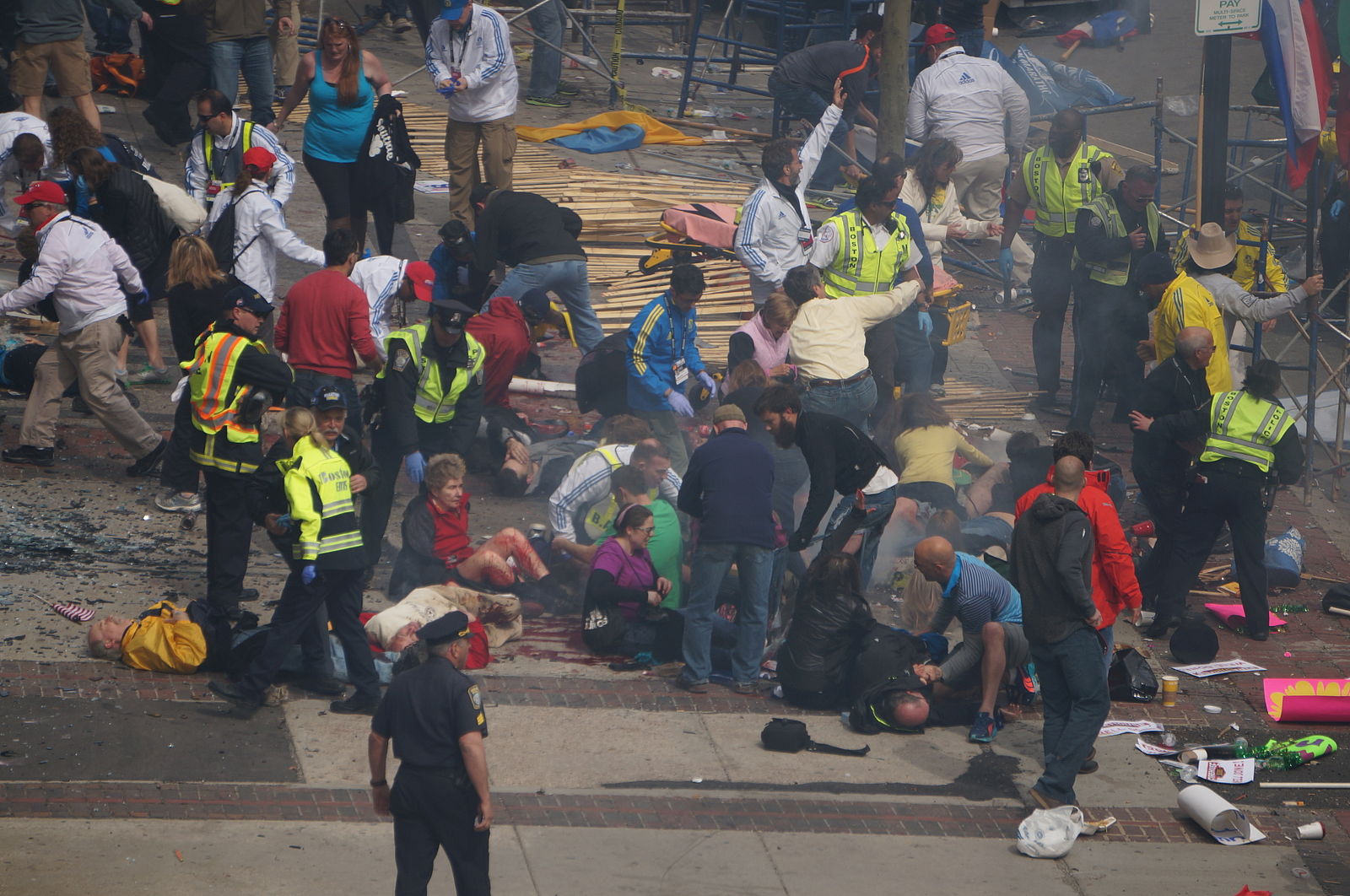
On April 15, 2013, the annual Boston Marathon was tragically disrupted by a terrorist attack involving two improvised explosive devices (IEDs). These bombs, loaded with nails and ball bearings, detonated near the marathon’s finish line on Boylston Street, killing three people and injuring 264 others. The victims included an eight-year-old boy, Martin Richard, 29-year-old Krystle Campbell, and 23-year-old Lu Lingzi. The event marked one of the most significant mass-casualty incidents in Boston since the Cocoanut Grove fire in 1942.
The perpetrators, brothers Tamerlan and Dzhokhar Tsarnaev, were identified through extensive investigation and public assistance. The subsequent manhunt culminated in a violent confrontation in Watertown, Massachusetts, resulting in Tamerlan’s death and Dzhokhar’s capture.
Detailed Timeline
April 15, 2013
- 2:49 PM: The first bomb detonates near the finish line of the Boston Marathon.
- 2:50 PM: The second bomb explodes approximately 180 yards away from the first.
- 2:51 PM: Emergency services are alerted and begin responding to the scene.
- 3:00 PM: On-scene commanders confirm no chemical or radiological contamination.
- 3:28 PM: All remaining marathon runners are stopped on the course.
- 4:47 PM: The first press conference is held, confirming the bombings and the initial response.
- 6:30 PM: The FBI takes over the investigation, confirming the incident as a terrorist attack.
April 16, 2013
- 9:00 AM: Runners begin retrieving their belongings.
- 9:40 AM: A press conference confirms the FBI’s lead in the investigation and requests public assistance.
- 12:00 PM: The Unified Command Center (UCC) stands down, transitioning operations to the State Emergency Operations Center (SEOC).
April 17, 2013
- 12:00 PM: A memorial service is held for Officer Sean Collier, who was killed by the suspects.
- 2:00 PM: The President issues an emergency declaration for Boston.
April 18, 2013
- 5:00 PM: The FBI releases images of the suspects, asking for public assistance in identifying them.
- 10:31 PM: MIT Police Officer Sean Collier is fatally shot by the Tsarnaev brothers.
April 19, 2013
- 12:19 AM: A carjacking victim provides information linking the suspects to the marathon bombings.
- 6:03 PM: The shelter-in-place request is lifted.
- 6:42 PM: A Watertown resident reports an individual hiding in his boat, leading to the capture of Dzhokhar Tsarnaev.
Lessons Learned
Positive Aspects
- Effective Medical Response: The immediate and coordinated response by medical personnel, including the use of a well-prepared medical tent near the blast sites, significantly contributed to the high survival rate among the injured. The rapid triage and transport of critically injured patients to trauma centers ensured that no one who arrived at a hospital alive subsequently died.
- Strong Interagency Collaboration: The pre-existing relationships and regular training exercises among local, state, and federal agencies facilitated an effective unified command structure. This collaboration was crucial in managing the chaotic scene, conducting the investigation, and ultimately apprehending the suspects.
- Public Communication: Frequent and clear communication from city and state leaders helped manage public fear and confusion. The establishment of hotlines for family reunification and tips from the public played a vital role in the investigation.
Recommendations for Improvement
- Enhanced Security Measures: The open nature of the marathon course made it easy for the perpetrators to place the IEDs. Future events should consider enhanced security protocols, such as bag checks, increased surveillance, and more secure viewing areas, while maintaining the event’s family-friendly atmosphere.
- Improved Communication Systems: The reliance on cell phone communication, which was disrupted during the incident, highlighted the need for robust backup communication systems. Future plans should include personal radios and other redundant communication methods to ensure continuous coordination among responders.
- Integrated Public Safety Plan: The lack of a single, comprehensive operational plan for all public safety organizations led to some inconsistencies in the response. Developing an integrated, all-hazards public safety operational plan for future events would ensure a more coordinated and effective response.
- Training for First Responders: While the use of tourniquets was beneficial, not all were applied effectively. Training for first responders on proper tourniquet application and other critical first aid techniques should be enhanced to improve outcomes in future incidents.
Conclusion
The Boston Marathon bombing was a tragic event that tested the resilience and preparedness of the city’s emergency response systems. While the response showcased many strengths, including effective medical care and strong interagency collaboration, it also highlighted areas for improvement. By learning from this event and implementing recommended changes, Boston and other cities can better prepare for and respond to future mass-casualty incidents. The spirit of community and resilience demonstrated in the aftermath of the bombings continues to inspire and define the strength of Boston.